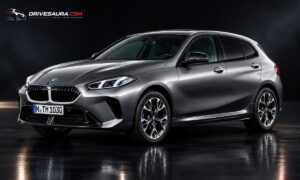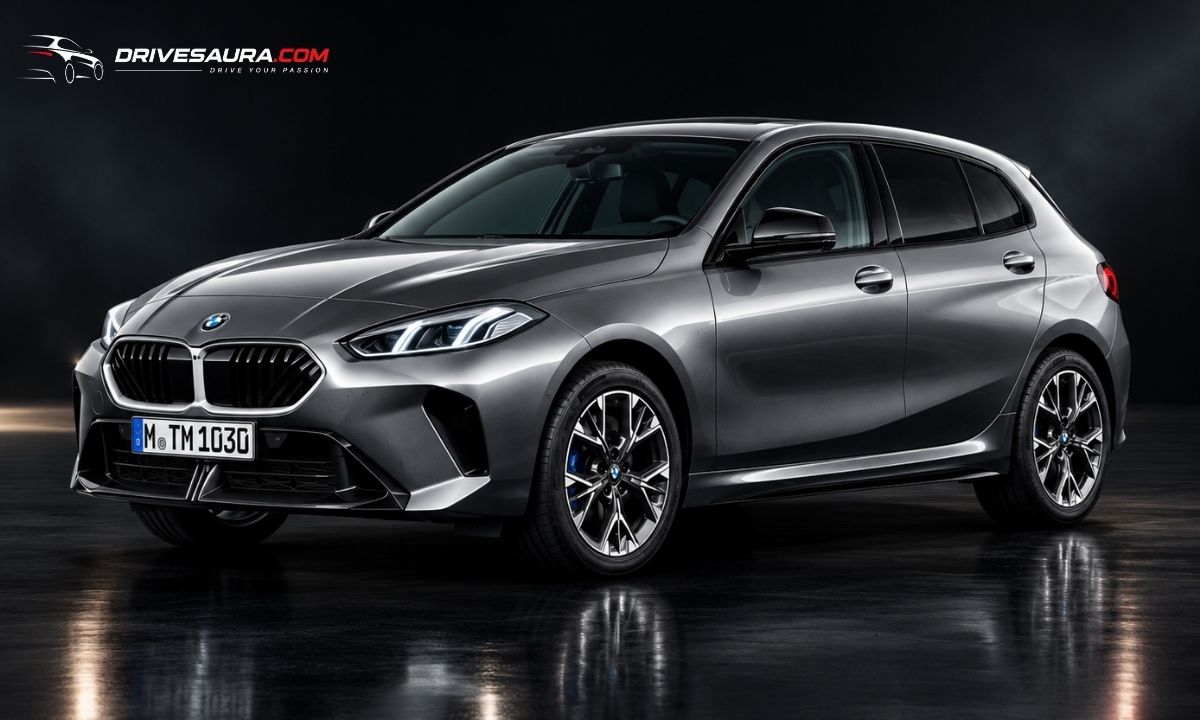
The BMW 1 Series 120 (2026) is a premium compact hatchback designed for buyers who want the refinement, technology, and driving character of a BMW in a practical, city-friendly package. It belongs to the fourth-generation 1 Series family, introduced for the 2025 model year, and combines a turbocharged petrol engine with 48-volt mild-hybrid technology.
In its German-market specification, the BMW 120 produces a combined system output of 170 PS (125 kW), with power delivered to the front wheels through a seven-speed automatic transmission. BMW quotes a 0–100 km/h acceleration time of 7.8 seconds and a top speed of 226 km/h. These figures make it suitable for everyday commuting and motorway driving without requiring the more powerful engine and all-wheel-drive hardware of the BMW M135 xDrive.
The 2026 BMW 1 Series 120 competes with premium hatchbacks such as the Audi A3 Sportback and Mercedes-Benz A-Class, alongside alternatives such as the Volkswagen Golf and CUPRA Leon. Its appeal comes from a combination of compact dimensions, modern infotainment, and balanced performance. However, equipment, prices, powertrain availability, and warranty coverage vary by country, so buyers should check their local BMW specifications before purchasing.
Quick Specifications Table
The following specifications primarily reflect the German-market BMW 120. Equipment and technical details may differ in other countries.
| Specification | BMW 1 Series 120 (2026) |
| Brand | BMW |
| Model Year | 2026 |
| Generation | Fourth generation, F70 |
| Body Style | Five-door premium hatchback |
| Powertrain | Petrol mild hybrid, 48-volt system |
| Engine | 1.5-litre turbocharged three-cylinder |
| Engine Displacement | 1,499 cc |
| Maximum System Power | 170 PS / approximately 168 hp / 125 kW |
| Engine Power | 156 PS |
| Maximum Engine Torque | Approximately 240 Nm / 177 lb-ft |
| Transmission | Seven-speed dual-clutch automatic |
| Drivetrain | Front-wheel drive |
| 0–100 km/h | 7.8 seconds |
| Top Speed | 226 km/h / approximately 140 mph |
| Fuel Economy | Approximately 5.3–5.9 L/100 km, WLTP, depending on configuration |
| CO₂ Emissions | Approximately 121–135 g/km, WLTP, depending on configuration |
| Length | 4,361 mm |
| Width | 1,800 mm, excluding mirrors |
| Height | 1,459 mm |
| Wheelbase | 2,670 mm |
| Seating Capacity | Five |
| Boot Capacity | Approximately 380 litres |
| Boot Capacity with Rear Seats Folded | Approximately 1,200 litres |
| Starting Price | Varies by market; confirm the applicable local price |
Specifications and efficiency figures should be checked against the official technical data sheet for the exact model year, market, trim, and wheel configuration.
Exterior Design and Dimensions
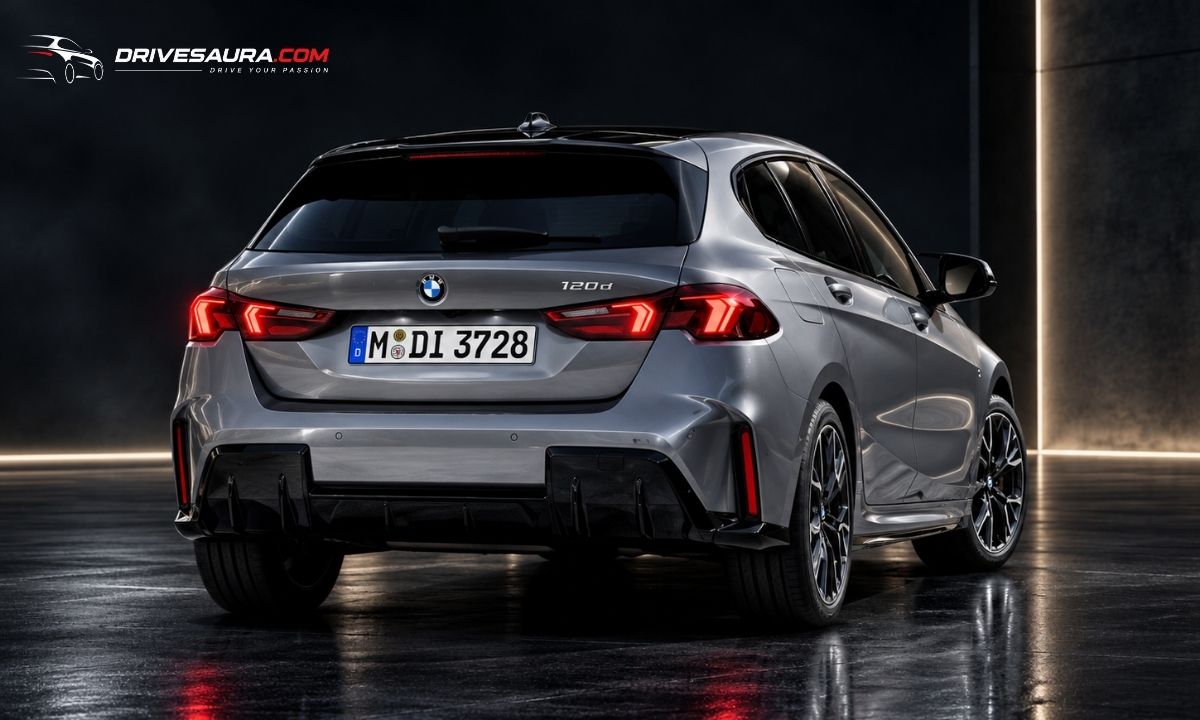
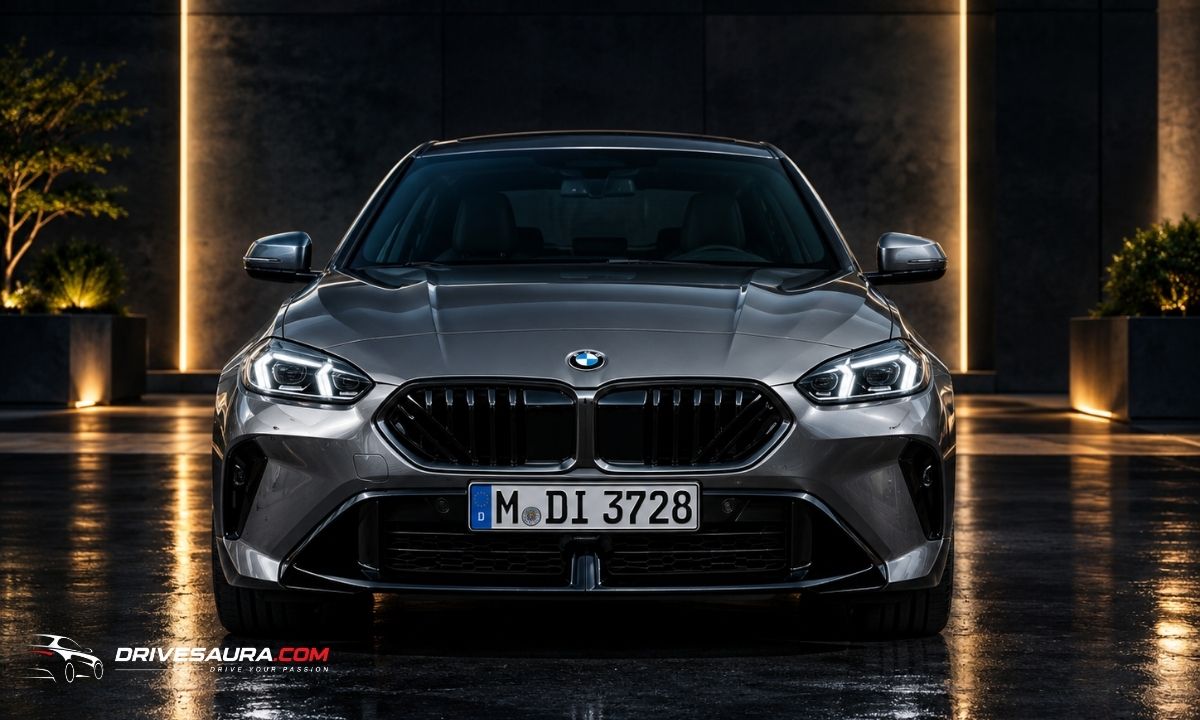
The BMW 1 Series 120 features a modern hatchback design with a sculpted bonnet, redesigned kidney grille, and slim headlight units. Its angular styling gives the car a more contemporary appearance than previous generations, while pronounced side surfaces create a purposeful profile.
At the rear, distinctive taillights, a shaped tailgate, and a relatively upright hatchback design balance sporty styling with everyday practicality. Buyers choosing an M Sport package can obtain a more aggressive exterior treatment and sportier wheel designs. However, exact equipment depends on the market and selected configuration.
The car’s dimensions suit urban driving. At 4,361 mm long, it is compact enough for many city parking spaces while offering useful cabin and luggage flexibility. Its 1,800 mm body width excludes the mirrors, so drivers should allow additional room when navigating narrow streets and parking garages.
The 2,670 mm wheelbase, which measures the distance between the front and rear axles, contributes to cabin packaging and road stability. Ground clearance and turning-circle figures should be confirmed for the specific local version rather than assumed from another market.
Interior, Comfort, and Practicality
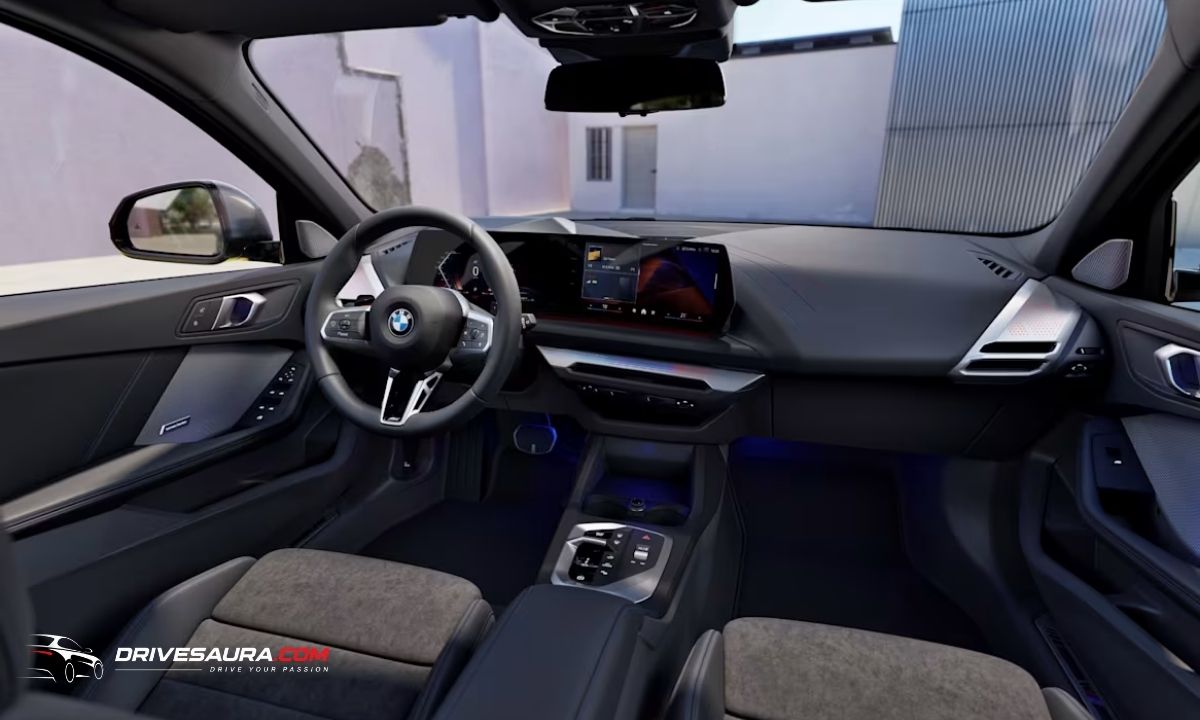
The BMW 1 Series 120 follows a modern, screen-focused interior design. Its dashboard integrates a digital instrument display and central infotainment screen into a curved display arrangement, creating a clean, contemporary cockpit.
BMW Operating System 9 provides access to multimedia, navigation, and vehicle settings on appropriately equipped versions. Additional equipment, such as a head-up display and upgraded infotainment functions, may be available depending on the configuration.
Material quality, seat upholstery, and comfort equipment vary by trim. Standard configurations are designed for everyday use, while sportier packages can introduce different upholstery, seat designs, and interior accents. Heated seats, upgraded audio, and additional comfort features may be optional.
The front seats provide a conventional driving position with access to the main controls. Rear accommodation is suitable for everyday journeys, although taller passengers may find knee room and headroom less generous than in a larger sedan or SUV. As with many compact hatchbacks, the middle rear seat is better suited to occasional use than long-distance travel for three adults.
The approximately 380-litre boot provides useful space for shopping, luggage, and everyday family needs. Folding the rear seats increases capacity to around 1,200 litres, making it easier to transport larger objects.
Buyers who regularly carry bulky luggage should compare the boot opening, loading height, and available space with those of the Audi A3 Sportback and Volkswagen Golf.
Engine and Powertrain Specifications
The BMW 120 uses a 1.5-litre, three-cylinder turbocharged petrol engine supported by a 48-volt mild-hybrid system. This arrangement combines conventional combustion with electrical assistance to improve efficiency and smooth powertrain operation.
BMW lists the system’s maximum output as 170 PS (125 kW), equivalent to approximately 168 mechanical horsepower. The petrol engine itself produces 156 PS, while the mild-hybrid system provides additional electrical assistance under suitable operating conditions.
The engine’s displacement is 1,499 cc, which is relatively small for a premium hatchback. Turbocharging allows it to produce useful power without requiring a larger engine.
Maximum combustion-engine torque is approximately 240 Nm (177 lb-ft). Torque describes the turning force that helps a car accelerate, particularly when pulling away or overtaking. The mild-hybrid system can support the engine’s operation, but it should not be confused with a separate electric-driving mode.
A seven-speed dual-clutch automatic transmission handles gear changes, while front-wheel drive sends engine power to the front wheels. The dual-clutch design can deliver quick gear changes, although low-speed behavior may feel different from that of a conventional torque-converter automatic in stop-and-go traffic.
The 48-volt system is not a plug-in hybrid. It does not provide a conventional advertised electric-only driving range. Instead, it assists the petrol engine and recovers energy during suitable deceleration conditions.
Performance and Driving Dynamics
The German-market BMW 120 has a manufacturer-quoted 0–100 km/h acceleration time of 7.8 seconds and a top speed of 226 km/h. These are manufacturer figures rather than independent instrumented test results. Actual acceleration can vary with vehicle equipment, road surface, temperature, load, and testing conditions.
For everyday driving, this performance is sufficient for joining motorways, overtaking slower traffic when conditions permit, and maintaining pace on faster roads. The BMW 120 is not designed to match the acceleration of a dedicated performance hatchback such as the BMW M135 xDrive, but it provides a useful balance between performance and running costs.
The front-wheel-drive layout makes the car straightforward to operate in everyday conditions. It also differs from older generations of the 1 Series that used rear-wheel drive. The current architecture prioritizes packaging efficiency and helps preserve passenger and luggage space within a compact body.
Independent launch reviews have praised the 120’s steering response and body control, while noting that its suspension can transmit sharper road imperfections into the cabin. Reviewers have also described the engine as refined during ordinary driving but more audible when worked hard.
These observations depend on the road surface, wheel size, suspension configuration, and driving conditions. A test drive on local roads is worthwhile, especially for buyers who prioritize comfort over rough surfaces as much as handling.
Fuel Economy and Emissions
Fuel economy is one of the BMW 120’s practical considerations. German-market WLTP figures vary with the vehicle configuration and published specification, with reported combined consumption figures around 5.3–5.9 L/100 km.
These figures should not be treated as a guaranteed consumption rate for every 2026 vehicle. Buyers should check the official value for their exact trim, wheel size, and equipment.
WLTP is a standardized testing procedure intended to represent a range of driving conditions. It is useful for comparing vehicles tested under the same procedure, but real-world consumption depends on traffic, average speed, driving style, temperature, tyre choice, and climate-control use.
The mild-hybrid system can recover energy during deceleration and support the combustion engine under suitable conditions. This can help reduce fuel consumption, although the benefit varies with the journey. Frequent short trips and heavy traffic may produce different results from steady motorway driving.
Published German-market figures indicate CO₂ emissions of approximately 121–135 g/km across the cited configurations. These are WLTP values rather than measurements of every vehicle on the road. Buyers should use the official figure for their exact vehicle when calculating taxes or comparing emissions.
Safety and Driver-Assistance Technology
The BMW 1 Series 120 offers modern safety and driver-assistance technology, but the precise package depends on the country and specification. Buyers should distinguish between standard safety equipment, standard assistance features, and optional upgrades.
Potential equipment includes automatic emergency braking, driver-attention monitoring, parking sensors, and camera assistance. More advanced functions, such as adaptive cruise control, enhanced lane assistance, or upgraded parking automation, may require a particular package or trim.
Available parking assistance can include a reversing camera, Active Park Distance Control, and a reversing assistant. The exact equipment should be confirmed against the local specification sheet because standard fitment and availability differ between markets.
A comprehensive safety assessment should also consider airbags, electronic stability control, braking systems, and independent crash-test performance. Any Euro NCAP, IIHS, or NHTSA rating should be checked against the correct model generation, assessment year, and tested specification.
No specific 2026-market crash-test score is claimed here without a sufficiently verified rating source. Buyers should confirm which safety and driver-assistance functions are fitted to the actual vehicle before purchasing.
Infotainment and Connectivity
The BMW 1 Series 120’s digital cockpit is central to its premium positioning. BMW Operating System 9 supports infotainment, navigation, and vehicle settings through the integrated display system on suitably equipped versions.
The curved display arrangement provides a modern appearance, although many settings are accessed through the touchscreen rather than separate physical buttons.
Smartphone integration, connected services, and navigation availability should be confirmed for the particular market. Features may differ according to smartphone compatibility, regional software, subscription status, and optional equipment. Do not assume Apple CarPlay, Android Auto, wireless charging, or premium audio are standard on every version without checking the local specification.
The digital interface combines navigation and media functions, but settings that older cars handled with dedicated controls may require additional screen interaction. Buyers should test the interface to determine whether it is comfortable and intuitive for daily use.
Connected services can also change over the ownership period. Ask the dealer which functions are included, which require an account or subscription, and whether any trial periods apply.
BMW 1 Series 120 Variants and Pricing
BMW’s 1 Series lineup varies by country. The standard 120 is the main model covered in this review, while the M Sport specification generally emphasizes sportier styling and equipment. The M135 xDrive is a distinct, more powerful performance model rather than simply an equipment package for the 120.
| Variant | Powertrain | Main Differences | Pricing Guidance |
| BMW 120 | 1.5-litre turbo petrol mild hybrid | Core equipment and standard powertrain | Check the local 2026 price list |
| BMW 120 M Sport | 1.5-litre turbo petrol mild hybrid | Sportier exterior and interior treatment; equipment varies | Depends on local packages and options |
| BMW M135 xDrive | 2.0-litre turbo petrol | Higher performance, all-wheel drive, and sport-focused hardware | Separate performance-model pricing |
The table describes principal model distinctions, not a guarantee that all three are sold in every market. Availability, trim names, and standard equipment must be confirmed locally.
What Does the BMW 1 Series 120 Cost?
There is no single global starting price because BMW applies different prices, taxes, equipment packages, and distribution arrangements across countries.
BMW Germany’s October 2026 leasing example lists an acquisition price of €28,953.43 for a BMW 120, with 36 monthly payments of €299 and a stated total of €10,764. The offer has specific mileage, contract, and registration conditions. The acquisition price in a leasing illustration should not automatically be treated as a universal recommended retail price.
For a purchase decision, request a dated quotation identifying the exact model year, trim, optional equipment, delivery charges, and taxes.
Buyers in Pakistan and other markets where the 1 Series is not part of the regular local lineup should verify whether the vehicle is officially distributed or privately imported. Import duties, registration charges, currency movements, and warranty coverage can materially change the final cost.
Ownership, Warranty, and Running Costs
The BMW 120’s mild-hybrid petrol powertrain avoids the need for external charging equipment. This makes ownership simpler than that of a plug-in hybrid or electric vehicle for drivers without home-charging access. Fuel remains a recurring expense, and actual consumption depends on where and how the car is driven.
Routine servicing should follow the maintenance schedule for the relevant market and engine specification. Oil, filters, brake components, tyres, and other wear items contribute to the overall cost of ownership.
Premium-brand replacement parts and specialist labour may also make repairs more expensive than on mainstream hatchbacks, although the actual difference depends on location and repair requirements.
Tyres deserve particular attention on versions fitted with larger or sportier wheels. These may cost more to replace and can influence ride comfort. Insurance premiums depend on the driver’s circumstances, local repair costs, vehicle value, and insurer policy.
Warranty coverage is market-specific. Buyers should request written details of the vehicle warranty, any separate mild-hybrid component coverage, scheduled maintenance plans, and exclusions.
Before purchasing an imported vehicle, confirm whether an authorized BMW workshop will service it, whether diagnostic support and parts are available, and whether the original warranty remains valid in the destination country. These details are particularly important where the model is uncommon.
Pros and Cons of the BMW 1 Series 120
| Pros | Cons |
| Strong everyday performance: The 170 PS system output and quoted 7.8-second acceleration time provide useful performance. | Not a full hybrid: It cannot be treated as an electric-driving alternative to a plug-in hybrid. |
| Compact practicality: Five doors and a useful boot support commuting and everyday errands. | Limited rear space: Larger vehicles may better suit adults who frequently travel in the back. |
| Modern digital cabin: The curved display and connected technology create a contemporary cockpit. | Screen-focused controls: Some functions may require more touchscreen interaction than physical controls. |
| Claimed fuel efficiency: Published WLTP consumption is reasonable for a premium petrol hatchback. | Configuration affects economy: Wheels and equipment can change the official consumption figure. |
| Responsive handling: Independent reviews praise steering response and body control. | Ride comfort requires consideration: Sportier setups may feel firm on rough roads. |
| No external charging requirement: The mild-hybrid system operates without a charging station. | Premium ownership costs: Insurance, tyres, servicing, and parts can be expensive in some markets. |
The BMW 120 is most appealing to drivers who want a premium compact car with engaging road manners and modern technology. Buyers who prioritize rear-seat space, a particularly soft ride, or the lowest possible maintenance costs should compare alternatives before deciding.
BMW 1 Series 120 vs Competitors
The main competitors include the Audi A3 Sportback, Mercedes-Benz A-Class, Volkswagen Golf, and CUPRA Leon. Exact engine options and prices differ between countries, so the following comparison focuses on general positioning rather than combining unverified prices from different markets.
| Model | Powertrain | Power and Performance | Efficiency and Practical Focus |
| BMW 120 | 1.5-litre turbo petrol mild hybrid, front-wheel drive | 170 PS system output; 0–100 km/h in 7.8 seconds | Premium driving character and compact practicality |
| Audi A3 Sportback | Petrol and other market-dependent options | Varies by engine and trim | Refined cabin and understated premium styling |
| Mercedes-Benz A-Class | Petrol, diesel, or hybrid options, depending on market | Varies by engine and trim | Technology-focused cabin and comfort-oriented appeal |
| Volkswagen Golf | Petrol, diesel, and electrified options, depending on market | Wide range across standard and performance models | Practical all-rounder with broad powertrain choice |
| CUPRA Leon | Petrol and electrified options, depending on market | Varies substantially by trim | Sporty styling and performance-focused alternatives |
Independent automotive reviews identify the Audi A3, Mercedes-Benz A-Class, and Volkswagen Golf as direct rivals to the BMW 1 Series. The CUPRA Leon is another alternative for buyers who prefer a sportier interpretation of the compact hatchback.
Which Competitor Makes the Most Sense?
Audi A3 Sportback: Worth considering for buyers who prefer restrained styling and a premium cabin. Compare the exact engine and suspension configuration before deciding which vehicle is more comfortable.
Mercedes-Benz A-Class: A strong alternative for shoppers drawn to a technology-focused interior and a different styling approach.
Volkswagen Golf: Worth shortlisting for its broad model range and practical everyday layout, particularly when value matters as much as brand prestige.
CUPRA Leon: Relevant to drivers who want a sportier appearance and performance-oriented versions within a similar compact-car category.
A fair comparison should use the same country, model year, powertrain category, and price type. A base price from one country cannot be directly compared with a tax-inclusive drive-away price from another. Standard equipment and optional extras should also be considered.
Who Should Buy the BMW 1 Series 120?
The BMW 1 Series 120 is best suited to buyers seeking a premium hatchback for daily commuting, urban driving, and regular motorway journeys. Its compact dimensions make it easier to manage than a large luxury sedan or SUV, while its 170 PS system output offers more than basic transportation performance.
It can also suit couples and small families who need five doors, a useful boot, and flexible rear seating. The mild-hybrid setup is particularly convenient for drivers who want some electrification without relying on a charging station.
Enthusiasts who want significantly stronger acceleration, all-wheel drive, and more performance-oriented hardware should consider the M135 xDrive or compare other performance hatchbacks.
Meanwhile, buyers who prioritize maximum rear-seat space, a softer ride, or lower repair costs may find a mainstream hatchback or larger vehicle more appropriate.
For international buyers, the final decision should also account for dealer support, import taxes, insurance, and parts availability. A vehicle that looks attractive at its advertised price may be less compelling if local ownership support is limited.
Frequently Asked Questions
What Is the Price of the BMW 1 Series 120 (2026)?
The price depends on the country, trim, taxes, and optional equipment. BMW Germany’s October 2026 leasing example lists an acquisition price of €28,953.43, but this is not a universal global retail price. Confirm the latest local quotation before purchasing.
How Much Horsepower Does the BMW 120 Produce?
The German-market BMW 120 produces 170 PS (125 kW) of combined system output, equivalent to approximately 168 mechanical horsepower. The petrol engine itself produces 156 PS, with the mild-hybrid system providing additional assistance.
What Engine Does the BMW 1 Series 120 Use?
It uses a 1,499 cc, three-cylinder turbocharged petrol engine supported by a 48-volt mild-hybrid system. A seven-speed automatic transmission and front-wheel drive are used in the cited specification.
How Fast Is the BMW 120 from 0–100 km/h?
BMW quotes an acceleration time of 7.8 seconds for the German-market 120. Actual results can vary with road conditions, vehicle equipment, temperature, and testing methodology.
What Is the Top Speed of the BMW 1 Series 120?
The German-market specification lists a maximum speed of 226 km/h, approximately 140 mph. The figure should be checked against the exact regional version before publication or comparison.
What Is the Fuel Economy of the BMW 120?
Published German-market WLTP figures vary by configuration, with combined consumption figures around 5.3–5.9 L/100 km. The exact official value should be confirmed for the vehicle’s wheels and equipment. Real-world consumption can vary depending on driving conditions.
Does the BMW 1 Series 120 Have an Electric-Only Driving Mode?
It uses 48-volt mild-hybrid technology rather than a plug-in hybrid powertrain. The system supports the petrol engine and can recover energy during deceleration, but it does not provide a conventional advertised electric-only range.
Is the BMW 1 Series 120 Front-Wheel Drive or All-Wheel Drive?
The BMW 120 specification covered in this review is front-wheel drive. The more powerful M135 xDrive is a separate performance model with all-wheel drive.
How Much Boot Space Does the BMW 1 Series 120 Offer?
The fourth-generation 1 Series offers approximately 380 litres of boot space, expanding to around 1,200 litres with the rear seats folded. This makes it practical for commuting, shopping, and many small-family requirements.
Is the BMW 1 Series 120 Worth Buying?
It can be a good choice for drivers who want premium branding, responsive handling, modern infotainment, and everyday practicality. However, the final decision should account for local pricing, ride comfort, optional equipment, and servicing costs. Comparing it with the Audi A3, Mercedes-Benz A-Class, and Volkswagen Golf is a sensible next step.
Conclusion
The BMW 1 Series 120 (2026) combines compact hatchback practicality with a turbocharged petrol mild-hybrid powertrain, modern digital technology, and engaging driving characteristics. Its 170 PS system output, quoted 7.8-second acceleration time, and approximately 380-litre boot make it a versatile option for buyers who want a premium daily driver without moving to a larger vehicle.
Its main limitations include market-dependent pricing, a potentially firm ride, touchscreen-focused controls, and ownership costs associated with a premium brand. Buyers should also distinguish the mild-hybrid 120 from the more powerful M135 xDrive and from plug-in hybrid alternatives.
For drivers who value compact dimensions, useful performance, and a modern cabin, the BMW 120 deserves consideration. Review the local specification and obtain a complete ownership-cost quotation before committing.

Usman is a passionate automotive writer and industry researcher with over 6 years of experience covering local and imported vehicle brands. He specializes in delivering fresh, accurate, and easy-to-understand information about cars, bikes, EVs, and automotive trends. His deep interest in the automobile industry helps readers stay updated with the latest launches, reviews, and market insights. Through DrivesAura.com, Usman aims to provide trustworthy content that helps vehicle enthusiasts make informed decisions. His dedication to quality research and real-world automotive knowledge makes him a reliable voice in the auto niche.